Printable Coloring Books & Activities — Instant Download
Why Educational Coloring Books, Activity Books, and Story Books Help Reduce Screen Time for Kids
Discover how educational coloring books, printable activity books, and story books help reduce screen time while improving creativity, focus, imagination, and learning for kids.
EDUCATIONAL PRINTABLEKIDS ACTIVITIESSCREEN-FREE LEARNINGCOLORING BOOKS
Mind Play Prints
5/27/20268 min read

Understanding the Impact of Excessive Screen Time on Children
In today’s digital age, children are increasingly exposed to screens for extended periods, raising concerns regarding their development and wellbeing. Experts in child development emphasize that excessive screen time can lead to numerous adverse effects on children. For instance, prolonged digital engagement is often correlated with shorter attention spans. This may hinder a child’s ability to focus on tasks, both in academic settings and in daily life activities. Research indicates that children who spend excessive time on screens may find it challenging to sustain attention for more than a few minutes, impacting their learning abilities and engagement levels.
Moreover, excessive screen exposure may detract from the development of creativity. Engaging with visuals and interactive content can stifle imaginative thinking, as children may become accustomed to passive consumption rather than active participation in creative tasks. Studies have shown that children who spend considerable time on screens often demonstrate a decline in imaginative play, an essential component of child development that fosters creativity and problem-solving skills.
Furthermore, the overstimulation from fast-paced media can leave children feeling anxious or overwhelmed. Excessive screen time not only affects their mood but also alters their perception of reality, making it difficult for them to engage in meaningful, real-world interactions. Parents have expressed concerns regarding their children's learning abilities and engagement when reliance on screens becomes excessive. This reliance on digital devices risks detaching children from hands-on learning experiences that promote critical thinking, social skills, and emotional growth.
In light of these findings, it is crucial for parents to recognize the impact of excessive screen time on their children's development and actively seek alternatives that can promote engagement and creativity without the need for digital devices.
The Search for Meaningful Screen-Free Alternatives
In today's digital age, parents are increasingly aware of the potential negative effects of screen time on children's development. As a result, there has been a notable shift towards seeking meaningful screen-free alternatives that engage children's minds and encourage creativity. Families are recognizing the importance of finding activities that not only capture children's interest but also contribute to their overall learning experiences.
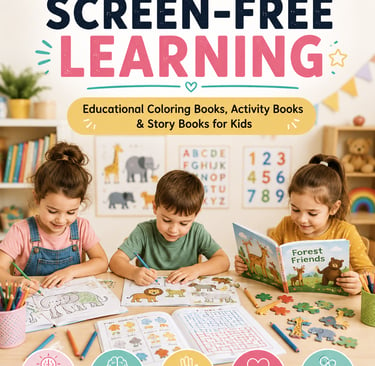
Educational coloring books, activity books, and storybooks have emerged as popular choices among parents striving to limit screen exposure. These formats provide a multifaceted approach to learning; they encompass artistic expression, storytelling, critical thinking, and even problem-solving skills. Whether it involves coloring complex designs, completing puzzles, or engaging in imaginative narratives, these activities entice children away from screens while promoting cognitive and emotional development.
Moreover, the shift towards screen-free activities emphasizes balance and moderation in technology use. Parents are seeking ways to weave engaging educational experiences into their children's daily routines. This not only allows for a reprieve from screens but also fosters family bonding. Activities such as storytelling sessions, group coloring projects, or interactive games shared among family members are becoming more prevalent.
This quest for engaging, educational methodologies propels parents to curate environments where children can thrive without the constant allure of digital devices. Through well-designed educational resources that stimulate curiosity and creativity, children find joy and satisfaction in learning. As families adopt more screen-free alternatives, they are not merely sidestepping screens; they are nurturing a well-rounded childhood that holistically supports their development, making the transition away from screens enjoyable and worthwhile.
The Power of Educational Coloring Books
Educational coloring books offer a multitude of benefits that often go unnoticed. While they are primarily seen as tools for entertainment, they significantly contribute to a child's development in various essential areas. One of the most prominent benefits of coloring books is their role in enhancing fine motor skills. As children grasp crayons or colored pencils, they engage in movements that strengthen their hand muscles, improving their dexterity and control.
Furthermore, coloring books play an integral role in developing hand-eye coordination. Every stroke and movement requires alignment between what children see on the page and how they translate that visually into their coloring actions. As kids fill in spaces, they learn to coordinate their movements so that their coloring falls within the lines, which is crucial for many activities they will encounter later in life.
Another significant benefit of educational coloring books is the boost they provide to creative confidence. When children are given the freedom to choose colors and create their unique expressions on paper, they become more confident in their artistic abilities. This empowerment can contribute to a greater overall sense of self-worth and initiative in learning.
The unique engagement that coloring books encourage is also noteworthy. Unlike passive screen time, coloring is an active process that invites children to slow down and think critically about their choices. This mindful engagement not only fosters deeper learning but also allows children to absorb educational content in a slower, more meaningful manner. Coloring books integrate educational elements seamlessly into enjoyable activities, reinforcing knowledge through creativity and play.
Overall, the benefits of educational coloring books extend well beyond recreation. By honing fine motor skills, improving hand-eye coordination, and nurturing creative confidence, these books offer parents a powerful tool for holistic child development while providing an enjoyable screen-free activity.
Benefits of Activity Books for Learning Development
Activity books serve as an invaluable resource for children's learning development, offering a myriad of interactive tasks that promote essential cognitive skills. Unlike passive forms of entertainment such as television or video games, which can lead to mindless consumption, activity books engage children in a hands-on manner, encouraging them to explore, solve problems, and think critically.
One of the primary benefits of activity books is their ability to foster problem-solving skills. Many of these books include puzzles, mazes, and challenges that require children to think strategically and find solutions. This form of engagement not only sharpens a child's analytical abilities but also enhances their confidence as they tackle various tasks. In contrast to screen-based activities, which often provide immediate gratification with little effort, activity books allow children to savor the journey of discovery, gradually working through challenges at their own pace.
Critical thinking is another crucial skill nurtured through activity book interactions. Activities that require children to analyze scenarios or make connections between ideas contribute significantly to their cognitive growth. Moreover, as children engage in story-based activities, they enhance their comprehension and narrative skills, which are critical for both academic success and effective communication. By inviting children to make choices within their activities, these books also encourage independent thought and creativity.
The creative aspect of activity books cannot be overlooked either. Many of these books include drawing, crafting, or coloring sections that allow children to express themselves artistically. This form of creative expression is vital for boosting young imaginations and developing fine motor skills. Children benefit from varied sensory experiences, stimulating their minds far more effectively than the passive visual engagement offered by screens.
By integrating thought-provoking exercises into their routines, parents can leverage the advantages of activity books to better prepare their children for an ever-evolving world, fostering a love for learning and exploration in a balanced, developmental manner.
The Importance of Story Books in Reducing Screen Time
Storybooks play a crucial role in the development of children, particularly in their early formative years. These books are not just a source of entertainment; they serve as vital tools for building literacy skills, igniting imagination, and fostering empathy. Unlike screens, which often provide a passive experience, engaging with storybooks requires active participation from young readers, encouraging them to visualize characters, settings, and events. This aspect of storytelling stimulates cognitive development and enhances critical thinking.
When children immerse themselves in narratives, they learn to interpret language, comprehend plots, and articulate thoughts, all of which are essential components of literacy. Through repetitive reading and interaction with stories, children gradually recognize patterns in language, expanding their vocabulary and comprehension skills. In contrast, digital media often lacks the depth of engagement that traditional storybooks offer, as the immediacy of visuals can lead to a superficial understanding of content.
Moreover, storybooks enhance creativity by allowing children to explore different worlds through their imagination. They can envision the landscapes of magical realms or the emotions of diverse characters, an experience that screens cannot authentically replicate. This imaginative play is vital for psychological growth and helps children express their own thoughts and feelings more effectively.
Empathy is another valuable trait developed through the reading of storybooks. By engaging with characters from various backgrounds and circumstances, children learn to understand and reflect upon the emotions of others. This ability to empathize is crucial for building social connections and emotional intelligence. Thus, incorporating storybooks into daily routines presents a natural method for reducing screen time, promoting deeper learning and growth. As parents turn to these beloved literary treasures, they not only enrich their child's life but also help cultivate a lifelong passion for reading and storytelling.
How to Create a Balanced Environment for Screen-Free Learning
As parents seek to reduce screen time for their children, creating a balanced environment that fosters learning through screen-free resources becomes essential. Integrating educational coloring books, activity books, and story books into daily routines encourages children to engage in creative and stimulating activities that promote cognitive development. Here are some practical tips to achieve this goal.
First, establish a designated reading and activity corner in your home where children can easily access educational materials. Stock this space with a variety of coloring books, crossword puzzles, and story books that cater to different age groups and interests. By having a specific area for screen-free activities, children are more likely to choose these resources over screens during leisure time.
Next, set aside daily dedicated time for screen-free learning. For example, consider implementing a family reading hour or an arts and crafts session each day. This not only instills a routine but also reinforces the idea that entertainment and education can be enjoyed offline. During these sessions, parents can engage in activities alongside their children, fostering a sense of togetherness and encouraging social interaction.
Furthermore, utilize everyday scenarios to weave educational engagement into daily life. For instance, while cooking, encourage children to follow along with a recipe or create a shopping list using their favorite coloring book characters. This applies principles of literacy and numeracy in a practical context, demonstrating that learning occurs outside the pages of a book.
Lastly, it is beneficial to involve children in the planning of screen-free alternatives. Invite them to choose coloring pages, stories, or activities that intrigue them. This involvement not only fosters excitement about the chosen resources but also helps develop their decision-making skills.
Incorporating these strategies can significantly contribute to a balanced environment where screen-free learning thrives, promoting creativity and curiosity in children's lives.
Conclusion: Embracing Screen-Free Educational Activities for Holistic Development
As the digital age continues to permeate every aspect of our lives, parents face the challenge of balancing screen time with activities that promote holistic development in their children. This blog post has explored the significant role of educational coloring books, activity books, and storybooks in creating enriching, screen-free experiences. These resources not only entertain but also nurture creativity, enhance focus, and stimulate learning through imaginative play.
Educational coloring books, for instance, provide a platform for children to express their artistic skills while simultaneously learning about colors, shapes, and even stories. They encourage self-expression and help improve fine motor skills. Activity books further engage children through puzzles, games, and challenges that require critical thinking and problem-solving, all of which are essential skills that contribute to a child’s cognitive development.
Moreover, storybooks introduce children to the world of literature, enhancing their vocabulary and comprehension skills. They allow for exploration of diverse themes and concepts which can spark discussions between parents and children, fostering a deeper understanding of the world around them. By immersing themselves in narratives, children also improve their empathy and emotional intelligence.
By choosing educational coloring, activity, and storybooks over screens, parents can create a nurturing environment that encourages exploration and learning. This screen-free approach not only helps in developing various skills but also strengthens the parent-child bond through shared activities and discussions. Hence, embracing these educational tools can significantly contribute to a child’s overall development in a sustainable, engaging manner, empowering them to thrive in a balanced and health-conscious way.
Minds Play Printables
Explore our sleek website template for seamless navigation.
Contact
Newsletter
imagine@mindplayprints.com - Feel free to reach out to us via email at this address if you have any questions, comments, or need assistance . We're always here to help!
© 2026. All rights reserved.